Ancient & Early History
- 1000+ years ago: Somali people inhabit present-day Somalia.
- 10th–14th centuries: Arab forebears from the Quraysh tribe migrate to the Horn of Africa, establishing Somali clan lineages.
- 12th century onward: Clan families like the Darod, Dir, Hawiye, Isaaq, Digil, and Rahanweyn expand and migrate within Somalia and into Ethiopia and Kenya.
Colonial Period (1800s–early 1900s)
- 1840s: Britain annexes Aden; seeks Somali coast for cattle supplies.
- 1854: Richard Burton leads first European expedition into Somali interior.
- 1891 & 1894: Britain and Italy sign treaties defining spheres of influence in Somali territories (without Ethiopia’s input).
- 1896: Italy defeated by Ethiopia at the Battle of Adowa but keeps its Somali claims.
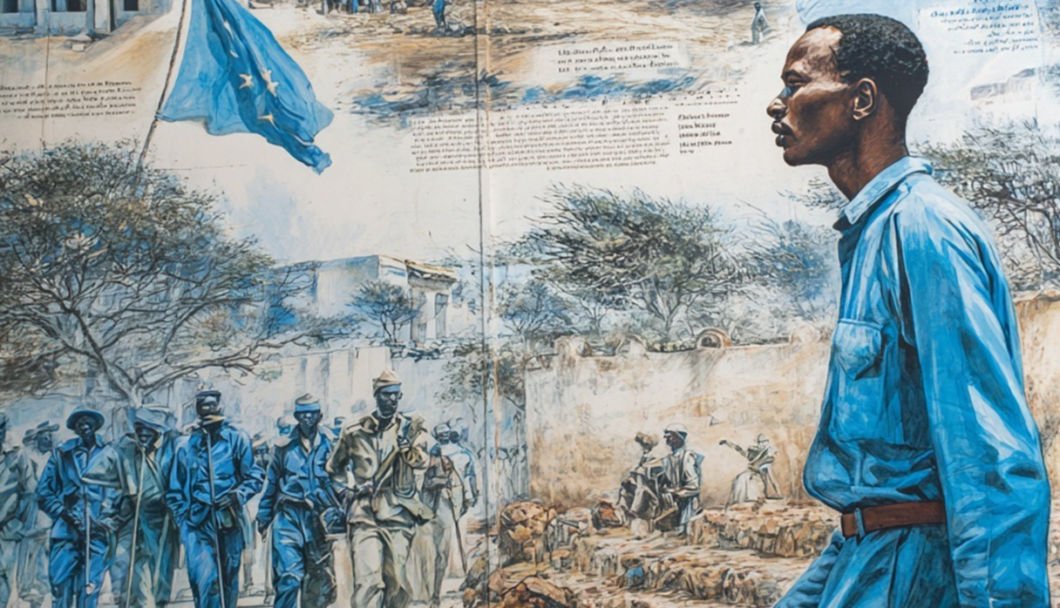
- Early 1900s: Somali religious leader Mohamed Abdullah Hassan (“Mad Mullah”) leads a 20-year insurgency (Dervish movement) against the British and Ethiopians.
- 1901–1904: Four major British military expeditions fail to capture him.
- 1910: Britain retreats to coastal areas, leaving interior under his control.
- 1920: Mohamed Abdullah dies in Ethiopia; Dervish movement collapses.
- 1920s–1930s: Fascist Italy consolidates control in southern Somalia; Britain controls the north. Italians centralize administration, use compulsory labor, and establish plantations and limited schools.
Path to Independence
- 1950: Former Italian Somaliland placed under UN trusteeship (Italian administration).
- 1960: Independence achieved; parliamentary government established for ~2 million culturally homogenous people.
Early Independence & Democratic Era (1960s)
- Economy based on nomadic pastoralism and small-scale farming.
- Political parties form largely along clan lines, led by Somali Youth League (SYL).
- 1967: Mohamed Ibrahim Egal becomes Prime Minister, improves relations with neighbors.
- 1969 (Oct 21): Major General Mohamed Siad Barre leads a coup d’état after parliamentary corruption and inefficiency; forms the Supreme Revolutionary Council (SRC).
Siad Barre & Socialist Era (1970s)
- 1970s (early): SRC nationalizes economy, launches socialist programs, literacy campaigns, “crash programs,” and self-help projects.
- 1974: Somalia and USSR sign Treaty of Friendship and Cooperation; Soviets gain access to naval/air bases.
- 1974–75: Severe drought kills many nomads and livestock; ~200,000 relocated with Soviet aid.
- 1976: Somali Revolutionary Socialist Party replaces SRC.
- 1977–1978: Ogaden War – Somalia invades Ethiopia’s Ogaden region for “Greater Somalia.” USSR and Cuba back Ethiopia; U.S. shifts toward Ethiopia. Somalia is defeated; Siad Barre expels Soviets.
Decline of Siad Barre Regime (1980s)
- Early 1980s: Somalia turns toward U.S. for aid; remains strategically important in Cold War.
- 1980: State of emergency declared. Tribalism resurfaces as Siad Barre fills leadership with clan loyalists.
- 1982: Population ~4 million; economy collapses, per capita income ~US$130. Somalia ranked among world’s least developed countries.
Civil War & State Collapse (1991–1999)
- 1991: Siad Barre’s regime collapses; Somalia descends into civil war and state disintegration.
- 1991–1992: Clan-based violence, famine, and displacement kill hundreds of thousands.
- 1992: International intervention begins: U.S. launches Operation Restore Hope, later taken over by United Nations missions (UNOSOM I & II).
- 1993: “Black Hawk Down” incident in Mogadishu leads to U.S. withdrawal. UN mission fails to restore central authority.
- Mid–1990s: Warlords and militias dominate; no effective central government. Somaliland in the northwest declares independence (not internationally recognized). Puntland in the northeast establishes autonomous administration in 1998.
Transitional Efforts & Rise of Islamists (2000–2006)
- 2000: Transitional National Government (TNG) created in Djibouti peace talks, but weak and limited in influence.
- 2004: Transitional Federal Government (TFG) established in Kenya; Abdullahi Yusuf Ahmed becomes president.
- 2006: Islamic Courts Union (ICU) rises to power, taking control of Mogadishu and much of the south, promising order and justice.
- Late 2006: Ethiopia intervenes militarily, with U.S. support, to oust the ICU and restore the TFG.
Al-Shabaab Insurgency & Foreign Interventions (2007–2011)
- 2007: Al-Shabaab, a radical offshoot of the ICU, launches insurgency against the TFG and Ethiopian forces.
- 2007: African Union Mission in Somalia (AMISOM) established to support TFG.
- 2009: Ethiopian forces withdraw; Al-Shabaab expands control.
- 2011: Severe famine kills ~250,000 people; Al-Shabaab blocks aid in areas it controls. AMISOM offensives begin pushing Al-Shabaab out of Mogadishu.
Federal Government Formation & State-Building (2012–2016)
- 2012: Federal Government of Somalia established, ending the transitional period. Hassan Sheikh Mohamud elected president.
- 2012–2016: Federalism introduced; regional states (e.g., Jubaland, Southwest, Galmudug) created. Efforts to rebuild institutions and security forces.
- 2014–2016: Al-Shabaab loses territory but maintains insurgency through bombings and guerrilla tactics.
Political Tensions & Continued Conflict (2017–2021)
- 2017: Mohamed Abdullahi Mohamed “Farmajo” elected president.
- 2017–2021: Government struggles with corruption, election delays, and conflict with federal member states over autonomy.
- 2020–2021: Al-Shabaab remains a major threat, carrying out large-scale attacks. Election disputes lead to political crisis and violent clashes in Mogadishu.
Return of Hassan Sheikh Mohamud & Reform Attempts (2022–2024)
- 2022: Hassan Sheikh Mohamud re-elected president after contentious elections, marking a peaceful transfer of power.
- 2022–2023: Government launches major offensive against Al-Shabaab with support from clan militias and African Union forces. Gains made in central regions, but insurgents remain resilient.
- 2024:
- U.S. cancels over $1 billion of Somalia’s debt as part of international relief efforts.
- Tensions between federal government and regional states (e.g., Jubaland elections).
- Diplomatic rift with Ethiopia after Somaliland signs port access deal; resolved in early 2025 through mediation.
Recent Developments (2025)
- Feb 2025: Al-Shabaab launches Shabelle offensive, seizing towns in central/southern Somalia; government and allied forces retake many areas.
- Mar 2025: Al-Shabaab attack on Cairo Hotel in Beledweyne kills over 20 people.
- Mar 2025: Assassination attempt on President Hassan Sheikh Mohamud’s convoy; he survives.
- 2025 (ongoing): Puntland forces engage Islamic State-aligned militants in northern mountains.
Visited 21 times, 1 visit(s) today