An impediment, also known as a blocker, is an obstacle preventing team members from completing tasks or achieving sprint goals. Various types of blockers need to be addressed immediately to maintain a smooth workflow


Online growth, one step at a time.
An impediment, also known as a blocker, is an obstacle preventing team members from completing tasks or achieving sprint goals. Various types of blockers need to be addressed immediately to maintain a smooth workflow

Throughout the workflow, it illustrates the status of tasks, allowing for insight into the efficiency and performance of the development process. Teams can use the cumulative flow diagrams to understand how work progresses, identify bottlenecks, and determine the appropriate pace of work.

Product Owners create infinite buffers by continuously adding backlog items without clear prioritization. Think of it as an endless queue where low-priority tasks never get addressed.

Cost prediction in agile estimates financial resources needed for project completion. This process differs from traditional budgeting due to Agile’s emphasis on flexibility and iterative progress. Teams must balance accurate forecasting with adaptable planning.
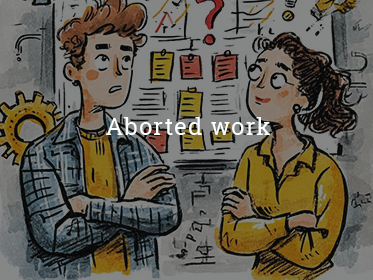
Agile methodologies define aborted work as tasks, features, or projects discontinued before completion. Teams stop working for various reasons, particularly when features no longer align with project goals, market needs, or strategic direction.

The Definition of Ready is a set of criteria for preparing work items before sprint inclusion. This ensures teams understand requirements before development and creates clear standards for story preparation, reducing confusion and implementation errors.

Understanding the principles of the three ways helps us comprehend what is needed to implement agility in our organisation. The three ways govern the fundamental concepts behind transformation and what to look for as its result


The futurespective leverages over 40 years of knowledge gained in positive psychology, the science of success, therapies, individual and team coaching, philosophy, and neuroscience. The Futurespective takes its operative guide from the brilliant work done in solution-focused brief therapy by its founders Steve de Shazer (1940-2005), and Insoo Kim Berg (1934-2007).